The yoga accessories market has evolved dramatically over the past few years, and the yoga towel has emerged as one of the most commercially relevant products in the wellness and fitness category. For B2B buyers — whether they are managing fitness retail chains, corporate wellness programs, yoga studio supply chains, or branded merchandise operations — understanding which design directions are gaining traction is critical for making smart purchasing decisions. Design trends in this space are not purely aesthetic; they reflect shifts in consumer behavior, material preferences, and the growing demand for functional yet visually appealing wellness gear.
This article explores the current B2B market landscape for yoga towel design trends — covering color palettes, print styles, material constructions, sizing options, and customization demands that are driving bulk purchase decisions in 2024 and beyond. Whether you are a distributor refreshing your catalog or a studio owner planning a private-label line, the following insights will help you identify which designs are resonating with end consumers and, more importantly, which ones are converting in wholesale and bulk channels.
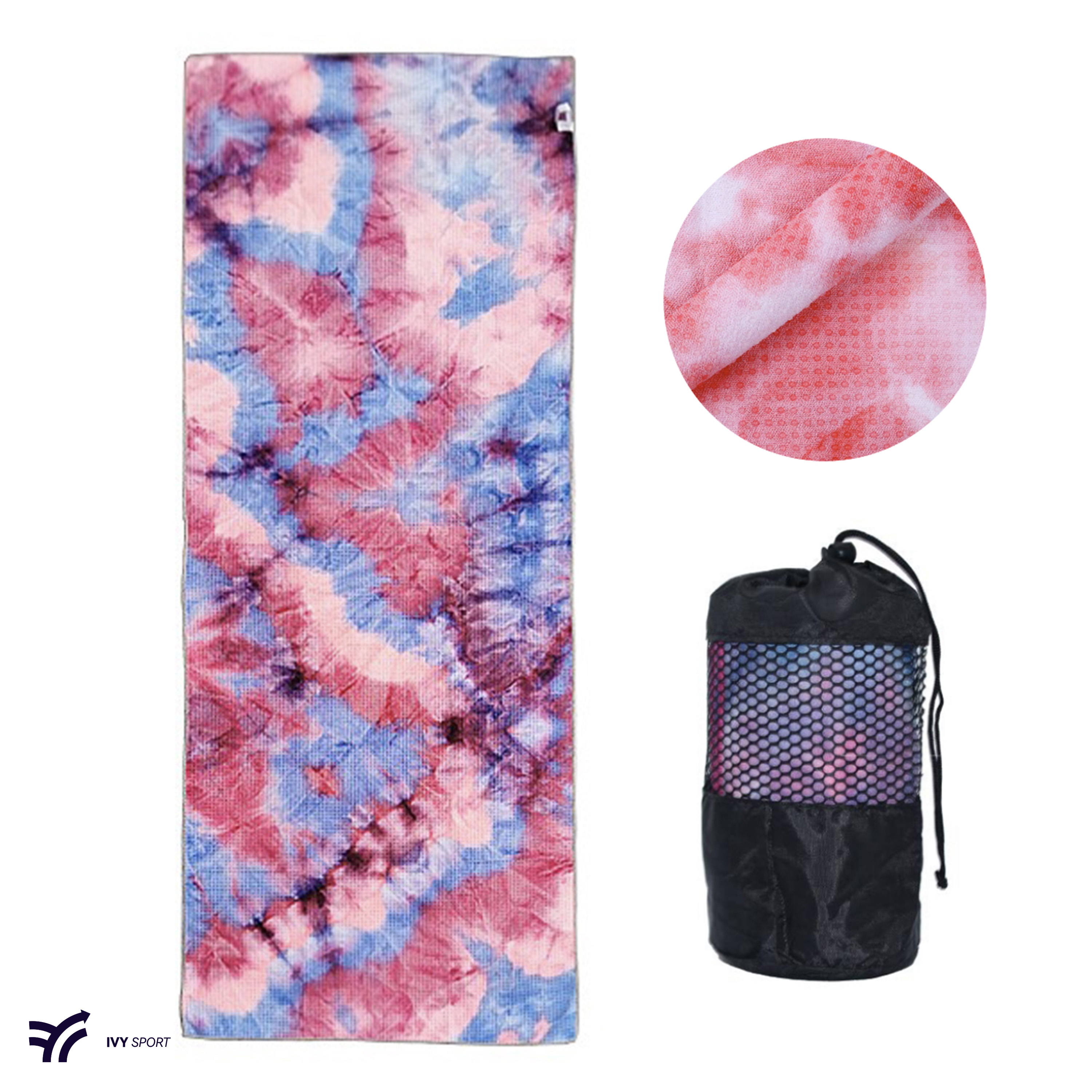
In the B2B yoga towel market, design is not merely decorative — it is a key driver of repurchase rate, brand alignment, and shelf velocity. Retailers and studio managers consistently report that products with on-trend designs sell faster, reducing inventory risk and increasing margin efficiency. When a yoga towel features a design that aligns with current lifestyle aesthetics, it attracts attention both online and in physical retail environments, translating directly into higher sell-through rates.
B2B buyers who understand the design preferences of their end-user base are better positioned to place confident bulk orders. A yoga towel that looks dated or uses colors and prints that feel out of step with the current market is a liability, not an asset. This is why procurement teams increasingly integrate trend research into their sourcing workflow, treating design selection with the same rigor as they apply to material specifications or pricing negotiations.
The practical implication is clear: investing in a yoga towel with trending design characteristics is a measurable business decision, not just a stylistic preference. Sales data from fitness retailers and online marketplaces consistently shows that design-forward products in the yoga category outperform generic alternatives by a significant margin.
The wellness industry's explosive growth has made yoga consumers more design-literate and more demanding. End consumers are purchasing yoga gear not just for functional use but as an expression of personal identity and lifestyle values. A yoga towel is seen on social media posts, in yoga studio Instagram feeds, and across wellness influencer content — meaning its design quality has marketing implications that extend far beyond the mat.
For B2B buyers, this cultural shift means that design selection is now a brand signal. When a fitness retailer stocks a yoga towel with a thoughtful, trend-aligned print, they are communicating something about their own brand values to customers. Studios that offer custom-designed yoga towels as branded merchandise or membership gifts are using the product as a loyalty tool, and the design quality directly affects how that gesture is received.
Understanding this context helps B2B procurement teams move beyond purely functional criteria and engage more strategically with the design dimension of product selection. A well-designed yoga towel can anchor a product category, differentiate a retail assortment, and strengthen studio brand identity — all of which have measurable commercial value.
One of the most consistent trends across B2B yoga towel orders in recent cycles is the dominance of earthy, nature-inspired color palettes. Terracotta, sage green, warm sand, dusty clay, and muted olive are replacing the bright neons and electric blues that dominated the market in previous years. This shift reflects a broader cultural movement toward grounding aesthetics in the wellness space — consumers want products that feel calming, organic, and aligned with mindfulness values.
For distributors and retailers, stocking a yoga towel in these earth-tone palettes has shown strong performance across both brick-and-mortar and e-commerce channels. These colors photograph well, pair naturally with wood-toned yoga accessories, and appeal to a wide demographic range — from young urban practitioners to older wellness converts. The commercial versatility of earth tones makes them a reliable choice for B2B buyers managing diverse retail assortments.
It is worth noting that earth tones also perform well in private-label and co-branding contexts. Studios and wellness brands that create custom yoga towel lines frequently gravitate toward these palettes because they feel premium without requiring complex printing processes, keeping unit costs manageable at scale.
Beyond solid colorways, gradient and ombre dyeing effects have emerged as a strong design trend in the premium yoga towel segment. These multi-tonal transitions — from deep teal to light aqua, or from blush pink to soft lavender — give a yoga towel a handcrafted, artisanal quality that resonates with consumers who are willing to pay more for perceived uniqueness.
From a B2B perspective, gradient designs justify higher wholesale price points and are particularly effective for boutique studio merchandise programs, wellness spa retail, and premium fitness apparel retailers. The gradient effect communicates investment in design without requiring overly complex manufacturing, which means the margin structure can remain attractive even at relatively modest minimum order quantities.
B2B buyers sourcing a yoga towel with gradient characteristics should pay close attention to dye consistency across production runs, as this is where quality differentiation occurs. Ensuring consistent color transitions from batch to batch is critical for maintaining the premium positioning that gradient designs command.
Mandala and geometric prints have been a staple of the yoga towel category for several years, and their demand remains robust in B2B channels for specific reasons. These patterns connect visually with the spiritual and meditative dimensions of yoga practice, making them feel authentic rather than merely decorative. Retailers report consistent sell-through for mandala-printed yoga towels across multiple seasons, suggesting a degree of evergreen demand that reduces the risk of trend-cycle obsolescence.
The key evolution in mandala and geometric design is the refinement of line quality and color restraint. Where earlier versions featured bold, saturated multi-color prints, the trending formats today use more restrained palettes — a single-color geometric on a neutral ground, or a fine-line mandala in gold on a warm sand base. These quieter interpretations feel more sophisticated and appeal to a broader audience without alienating the core yoga consumer base.
For B2B buyers managing category depth, a yoga towel with a refined mandala or geometric print is a reliable catalog anchor — it holds its commercial relevance across multiple seasons and appeals to both gift buyers and regular practitioners. This predictability has real value in wholesale inventory planning.
Botanical prints — featuring abstracted leaves, fern forms, tropical motifs, and floral line work — have grown significantly in the yoga towel market as the broader wellness aesthetic has embraced nature-forward visual language. These prints work particularly well for studio merchandise programs and wellness retreat gift sets, where the product needs to feel intentional, calming, and aligned with an outdoor or nature-connected brand identity.
Abstract prints, particularly those that evoke water movement, sky gradients, or organic flowing shapes, are also trending strongly in the premium segment. These designs are harder to replicate at low cost, which means they help B2B buyers differentiate their assortment from mass-market commodity yoga towels. A yoga towel with a well-executed abstract print commands attention both on a retail shelf and in editorial product photography.
Procurement teams selecting botanical or abstract designs for bulk orders should factor in print placement consistency — particularly for sublimation-printed yoga towels where the image spans the full surface. Uniform print quality across large production quantities is a non-negotiable requirement that should be part of the quality assurance framework before committing to significant order volumes.
The material base of a yoga towel has a direct impact on how well design elements are rendered and how the finished product is perceived by end users. Microfiber has become the industry standard for premium design-forward yoga towels because its ultra-fine fiber structure allows for sharp, vibrant print reproduction — particularly important for gradient, botanical, and complex geometric designs that require high resolution and color fidelity.
Beyond print quality, microfiber provides functional benefits that are central to the yoga towel value proposition: rapid moisture absorption, quick-drying performance, and a smooth surface that develops superior grip when in contact with perspiration. These functional attributes make microfiber the preferred specification for B2B buyers targeting active yoga practitioners who expect their yoga towel to perform as well as it looks.
When evaluating a microfiber yoga towel for bulk procurement, B2B buyers should assess GSM (grams per square meter) as a key quality indicator. Higher GSM values typically indicate greater absorbency and a more substantial hand feel, which supports the premium positioning of design-forward products. A yoga towel with both strong design execution and high-quality microfiber construction delivers the combination that drives both initial purchase and repeat business.
Non-slip silicone dot backing has become a near-universal expectation in the premium yoga towel segment, and its presence influences design decisions in meaningful ways. The backing pattern — whether scattered dots, grid formations, or full-coverage silicone printing — is now considered part of the product's overall aesthetic, with manufacturers offering options that complement the front-face design rather than treating the backing as a purely functional afterthought.
Size standardization is also shaping design trends in B2B contexts. The mat-length yoga towel (typically around 183 x 61 cm) remains the dominant format, but hot yoga towels, studio-use travel sizes, and oversized premium formats are creating new design canvas opportunities. Larger formats allow for more expansive print compositions, while compact sizes benefit from bold, centrally focused design elements that read clearly at smaller scale.
B2B buyers who align their yoga towel specifications — including size, backing type, and material grade — with their chosen design direction will produce a more coherent product that performs well across multiple evaluation criteria. Mismatches between premium design and economy-grade construction are immediately noticeable to experienced retail buyers and end consumers alike.
One of the strongest growth drivers in B2B yoga towel procurement is the corporate wellness merchandise segment. Companies investing in employee wellness programs, branded fitness gifts, or conference wellness packages are turning to the yoga towel as a practical, visually impactful branded item. Unlike generic promotional products, a well-designed yoga towel communicates an organization's commitment to health and lifestyle quality, making it a strong brand ambassador in a corporate gifting context.
For this market segment, design customization is the primary purchase driver. Corporate buyers want their logo, brand color palette, and sometimes a custom graphic or inspirational message integrated into the yoga towel design in a way that feels professional and premium rather than promotional. This requirement is pushing suppliers toward full-surface sublimation printing capabilities that can render custom brand elements with precision and consistency.
B2B procurement teams managing corporate wellness merchandise programs should plan their yoga towel specifications carefully, ensuring that brand color accuracy, print durability after washing, and packaging presentation all meet the standard expected for a premium branded product. A yoga towel that arrives looking generic or fades quickly undermines the brand investment it was intended to represent.
Yoga studios, fitness boutiques, and wellness centers are increasingly developing their own private-label yoga towel lines as a revenue diversification strategy and brand reinforcement tool. A studio-branded yoga towel that aligns with current design trends becomes a desirable retail product for students and a wearable brand advertisement for the studio in public spaces and social media. The design quality of these private-label products directly reflects on the studio's perceived expertise and aesthetic standards.
Successful private-label yoga towel programs typically combine trend-aligned design choices — such as the earth tones, botanical prints, or refined geometric patterns discussed earlier — with signature brand elements that make the product uniquely identifiable. The result is a yoga towel that feels current and desirable in the broader market while still being distinctly tied to the studio's identity.
For B2B buyers entering the private-label yoga towel space for the first time, the most important considerations are minimum order quantity, sample approval process, and print consistency guarantee across production batches. Working with a supplier who has demonstrable experience in private-label wellness product production significantly reduces the risk of quality mismatches between the approved sample and delivered goods.
In current B2B channels, yoga towel designs featuring earth-tone color palettes, refined geometric or mandala prints, and botanical motifs consistently perform well across both wholesale and retail distribution. Full-surface sublimation prints with gradient effects are showing strong performance in premium segments, while classic single-color prints on quality microfiber remain reliable catalog staples for value-tier offerings.
Material quality is extremely important and directly impacts how well design elements are rendered and how the product performs in use. Microfiber is the preferred material for design-forward yoga towels because it supports high-resolution printing, delivers strong moisture absorption, and dries quickly. B2B buyers should verify GSM ratings and request wash-fastness test results to ensure that design quality holds up after repeated laundering.
Yes, full customization is widely available in the B2B yoga towel market. Suppliers offering sublimation printing can incorporate brand logos, custom color schemes, and original graphic designs across the full surface of the towel. For corporate wellness programs, it is advisable to request physical samples before committing to a full production run, and to specify packaging requirements clearly to ensure a professional branded presentation.
Minimum order quantities for custom yoga towel production vary by supplier and printing method, but are commonly in the range of 50 to 200 units for sublimation printing and 100 to 500 units for woven or jacquard designs. B2B buyers with smaller initial requirements should look for suppliers who offer tiered pricing with flexible minimums, as this allows design validation before scaling to larger production volumes.

 EN
EN


