Choosing the right non-slip yoga towel is one of the most practical decisions a yoga practitioner can make. Whether you practice hot yoga, vinyasa, or restorative sessions, the towel beneath you directly influences your stability, hygiene, and performance. With countless options flooding the market, understanding which materials actually deliver on the promises of grip and durability is essential for making a smart, lasting investment.
A high-quality non-slip yoga towel must accomplish two things simultaneously: grip the mat surface securely so it does not slide during practice, and hold up through repeated washing and heavy use without losing its texture or functionality. These dual demands mean that material selection is not a cosmetic decision — it is a performance and engineering one. This guide breaks down the materials that make a non-slip yoga towel truly reliable, helping buyers, retailers, and brands identify what matters most beneath the surface.
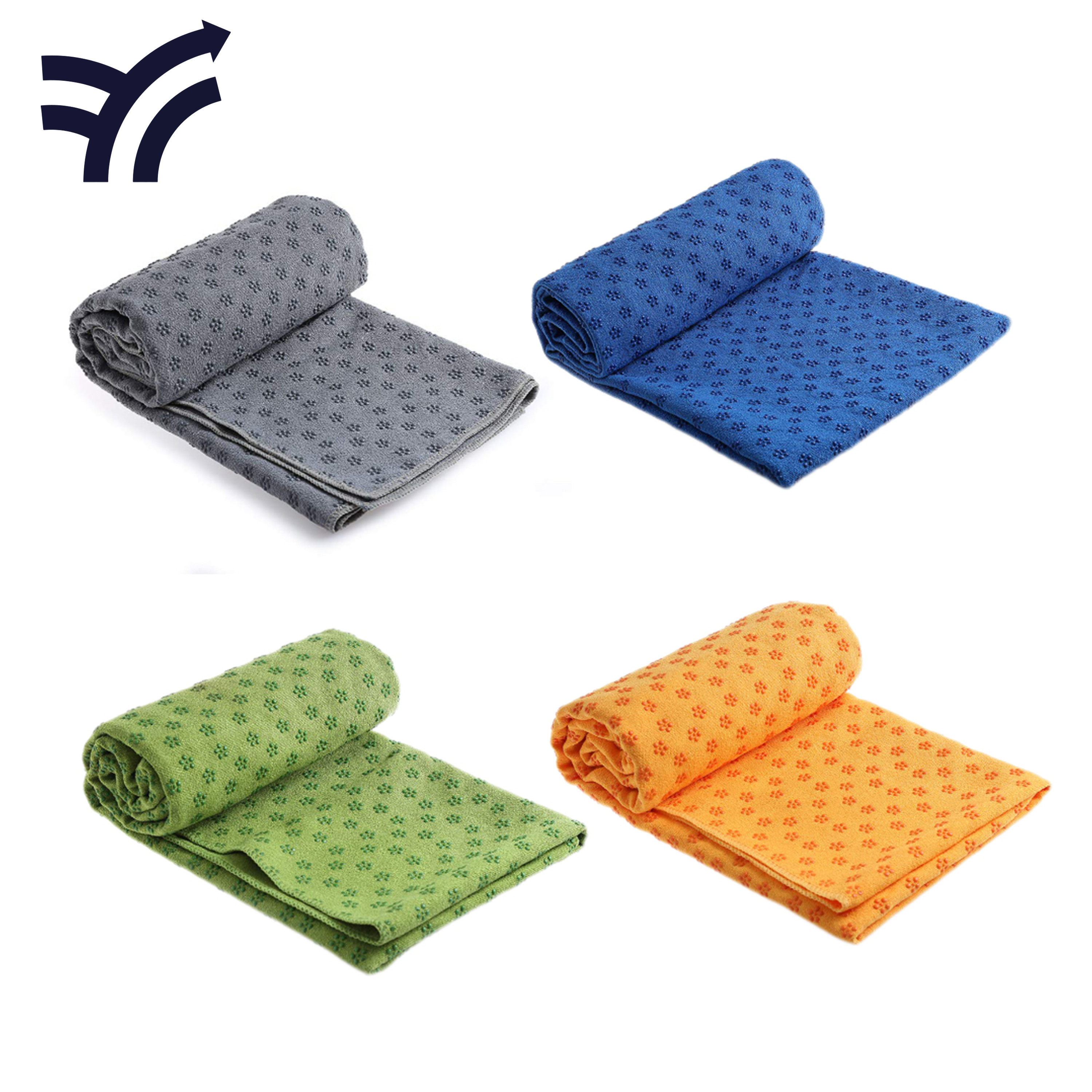
Microfiber is the most widely used top-surface material in any high-performing non-slip yoga towel, and for good reason. Its ultra-fine filaments — typically measuring less than one denier — create a dense, soft surface that interacts with moisture in a highly effective way. Unlike traditional cotton, which can become slippery when wet, microfiber increases its grip as it absorbs sweat, making it particularly well-suited for hot yoga environments where moisture is unavoidable.
The structure of microfiber also contributes to its longevity. Because the individual fibers are so fine and tightly woven, the fabric resists pilling, tearing, and deformation even after dozens of wash cycles. A non-slip yoga towel made with quality microfiber maintains its tactile properties far longer than alternatives made from looser or coarser weaves. For brands producing yoga accessories at volume, this material consistency translates directly into fewer customer complaints and higher retention rates.
It is important to note that not all microfiber is equal. The blend ratio between polyester and polyamide (nylon) within the microfiber mix significantly affects both grip and absorbency. A blend of roughly 80% polyester to 20% polyamide is considered the industry benchmark for balancing moisture-wicking, softness, and durability in a non-slip yoga towel. Deviating substantially from this ratio can compromise the towel's ability to grip the mat when it counts most.
Cotton and bamboo-derived fibers often appear in yoga towel products, marketed on the basis of their softness and eco-friendly appeal. While these materials do offer comfort and breathability, they generally fall short when evaluated specifically for non-slip performance under sweaty conditions. Cotton absorbs moisture readily but tends to become heavy and slippery as it saturates, reducing surface friction at the exact moment grip is most needed.
Bamboo fiber presents a similar challenge. Although it has natural antimicrobial properties and a pleasant texture, it lacks the mechanical grip-enhancement behavior that microfiber achieves through moisture activation. For a non-slip yoga towel that must perform reliably in dynamic or high-intensity practices, natural fibers work best as secondary components — blended in small percentages to add softness or sustainability credentials — rather than as the primary grip surface.
Retailers and B2B buyers sourcing non-slip yoga towel products for professional studios or wellness brands should weigh these trade-offs carefully. A towel marketed as eco-friendly but built primarily from natural fibers may disappoint users in performance-oriented settings, while a microfiber-based non-slip yoga towel that also incorporates some recycled polyester can satisfy both sustainability and performance expectations.
The top surface handles body-to-towel grip, but the bottom layer is what determines whether the entire non-slip yoga towel stays locked in place on the mat. Silicone dot printing has emerged as the most effective and widely adopted solution for this purpose. Small circular or honeycomb-shaped silicone dots are applied to the underside of the towel using heat-press or screen-printing methods, creating a textured surface that grips the mat's rubber or PVC top layer with significant friction.
The density, size, and pattern of silicone dots all influence the degree of grip. Finer, more densely packed dots tend to provide more consistent coverage across the towel's surface, while larger dots may offer stronger localized grip but with more gap between contact points. For a non-slip yoga towel intended for vigorous styles such as ashtanga or power yoga, a high-density silicone dot pattern on the bottom is a critical specification that buyers should confirm before placing bulk orders.
Durability of the silicone layer is another consideration that separates premium products from budget options. Low-quality silicone dots can begin to peel or flake after repeated washing, especially if the towel is machine-dried at high heat. High-grade silicone formulations bond more permanently with the fabric substrate, maintaining their grip effect through at least 100 wash cycles under standard care conditions. This is a key differentiator when evaluating the long-term value of a non-slip yoga towel for commercial or studio use.
Beyond silicone dots, some non-slip yoga towel designs incorporate a thin layer of TPE (thermoplastic elastomer) or natural rubber coating across part or all of the base surface. These materials provide a more uniform grip surface compared to dot patterns and can be particularly effective on smooth or polished studio floors when the towel is used without a mat. TPE is generally lighter and more flexible than rubber, making it a preferred choice in towel-mat hybrid products.
Natural rubber bases offer excellent grip and eco-friendly credentials, but they add weight and can be problematic for users with latex sensitivities. When incorporating rubber-based backing into a non-slip yoga towel, manufacturers typically use latex-free synthetic rubber to broaden the product's suitability across different user demographics. The backing layer also needs to be breathable or perforated to prevent moisture accumulation and odor, which is a common quality issue in towels with full rubber coverage.
For B2B sourcing purposes, understanding the base layer construction of any non-slip yoga towel is as important as evaluating the top surface. A beautiful, soft microfiber surface paired with a poorly bonded or thin silicone dot layer will not perform reliably, and that performance failure will reflect on the brand selling it rather than on the end manufacturer alone.
GSM, or grams per square meter, is a fundamental metric for evaluating the construction quality of any textile product, and the non-slip yoga towel category is no exception. A higher GSM generally indicates a denser, heavier fabric with more fiber content per unit area. For yoga towels, the ideal GSM range typically falls between 250 and 400. Towels below this range may feel thin and provide insufficient cushioning or absorbency, while those above it may become uncomfortably heavy when wet.
Weave density also affects how well the non-slip yoga towel resists stretching and distortion during practice. A loosely woven towel may shift or bunch under body weight, especially in poses where significant downward pressure is applied to a small surface area. A well-constructed towel maintains its shape across the entire practice session, returning to its flat, even form when the user repositions. This dimensional stability is partly a function of fiber quality and partly a result of the weaving or knitting process used during manufacturing.
Buyers evaluating a non-slip yoga towel for commercial distribution should always request GSM certifications or third-party test reports. These documents confirm that the stated fabric weight is accurate and provide a baseline for comparing competing products on an objective technical level rather than relying solely on visual or tactile assessment.
The edges of a non-slip yoga towel are often the first area to show signs of wear. Poor-quality overlocking or hemming allows the fabric to fray after repeated washing, which progressively undermines the towel's appearance and structural integrity. Double-stitched or reinforced edges with high-tensile thread significantly extend the lifespan of a yoga towel and are a reliable indicator of overall manufacturing quality.
For studio operators purchasing non-slip yoga towel products in volume for client use, edge durability is particularly important since towels are washed far more frequently than in home use scenarios. A towel that begins to unravel at the edges after twenty washes creates additional cost in replacement cycles and damages the studio's perception of quality. Specifying edge construction requirements as part of any bulk order is a practical step that protects the buyer's long-term interests.
Color fastness at the edges and throughout the body of the non-slip yoga towel is also a quality marker worth evaluating. Dyes should be reactive or solution-dyed to resist fading under UV exposure, frequent washing, and contact with sweat. Faded or blotchy coloration reduces the perceived value of the product significantly, even if its functional grip and absorbency remain intact. Requesting color fastness test results alongside GSM certifications gives buyers a comprehensive picture of towel quality before committing to large purchase volumes.
The most effective non-slip yoga towel products on the market today are rarely made from a single material. Instead, they employ a carefully engineered combination of materials at each layer of the towel's construction. The top surface typically uses a premium microfiber blend for sweat-activated grip and soft contact feel, while the base layer incorporates a high-density silicone dot or TPE film specifically formulated to anchor the towel against the mat surface without shifting.
Some advanced designs also incorporate a middle layer of moisture-buffering fabric — often a hydrophilic nonwoven or open-weave mesh — that manages the rate at which sweat moves from the body surface to the towel's internal structure. This prevents rapid saturation of the top layer, which can paradoxically reduce grip if sweat pools on the surface rather than being absorbed. This three-layer architecture is most relevant for hot yoga practitioners whose sweat volumes are substantial throughout a single session.
For brands seeking to differentiate a non-slip yoga towel in a crowded category, investing in a clearly defined and documented hybrid construction is more compelling to informed buyers than competing purely on price. B2B customers such as yoga studio chains, fitness equipment distributors, and private-label wellness brands increasingly evaluate suppliers based on material transparency and technical specificity, not just visual design or cost per unit.
The growing emphasis on sustainability in the fitness and wellness industry has driven meaningful innovation in non-slip yoga towel materials. Recycled PET fibers — derived from post-consumer plastic bottles — now achieve performance specifications comparable to virgin polyester in microfiber applications. When correctly processed and blended with polyamide, recycled PET-based microfiber can deliver the same moisture-activated grip behavior that makes a non-slip yoga towel effective in practice.
Silicone dot formulations have also evolved to incorporate partially bio-based or low-VOC compounds without sacrificing adhesion or wash durability. These developments allow manufacturers to produce a non-slip yoga towel that meets both performance benchmarks and sustainability reporting requirements — a combination increasingly demanded by corporate wellness programs, hospitality fitness centers, and direct-to-consumer brands with environmental positioning.
The key for buyers is to verify sustainability claims with certifications rather than accepting them at face value. Recognized standards such as GRS (Global Recycled Standard) for recycled content and OEKO-TEX for chemical safety provide verifiable assurance that a non-slip yoga towel meets specific environmental and safety thresholds. These certifications also support the buyer's own marketing claims when communicating product attributes to end consumers.
Microfiber increases its grip as it absorbs sweat, which is the opposite of cotton's behavior. Cotton becomes heavier and slipperier when wet, reducing friction at the surface where grip is most needed. The fine, dense filament structure of microfiber also allows it to maintain its texture through repeated washing cycles, making it a more durable and reliable material for a non-slip yoga towel used in high-intensity or moisture-heavy practices.
The longevity of silicone dot backing depends on the grade of silicone used and the bonding method applied during manufacturing. High-quality silicone formulations maintain adhesion through 100 or more wash cycles when the towel is cared for according to standard instructions. Buyers should request wash-cycle durability test data or third-party lab reports when evaluating a non-slip yoga towel for bulk purchase, and avoid machine-drying at high heat, which accelerates silicone degradation on lower-grade products.
Some non-slip yoga towel designs — particularly those with TPE or rubber backing — are thick and grippy enough to be used directly on a studio floor without a separate mat. However, most standard yoga towels are designed to be used on top of a mat rather than as a standalone surface. The primary role of the towel is to provide hygienic coverage and sweat-activated grip enhancement on top of the mat, not to replace the mat's cushioning and shock-absorption functions. Users needing a single-item solution should look specifically for towel-mat hybrid products built for standalone use.
The most relevant certifications for commercial sourcing of a non-slip yoga towel include OEKO-TEX Standard 100 (confirming the absence of harmful chemicals in the fabric), GRS or RCS (Global Recycled Standard or Recycled Claim Standard, if recycled materials are used), and ISO or ASTM-based textile test reports covering color fastness, tensile strength, and dimensional stability after washing. These documents provide an objective, third-party verified basis for evaluating quality claims and support compliance with import regulations in key markets.

 EN
EN


