When sourcing and distributing golf towels at scale, packaging is far more than a protective afterthought. For wholesale buyers, distributors, and brand merchandisers, the way golf towels are packaged directly influences retail appeal, logistics efficiency, perceived product value, and end-customer satisfaction. Getting packaging right at the wholesale level means balancing cost, presentation, durability, and market expectations — all at once. Whether you are preparing a private-label run or sourcing for a sporting goods chain, packaging strategy is a core business decision that deserves careful planning.
The wholesale market for golf towels is competitive and diverse, spanning pro shops, e-commerce platforms, corporate gifting channels, and sports retailers. Each of these channels has distinct packaging preferences, logistical requirements, and unboxing expectations. Understanding how to tailor your packaging approach for different wholesale environments gives your golf towels a measurable advantage in crowded market shelves. This article explores the most effective packaging methods, materials, and strategies to help you move golf towels successfully through wholesale distribution.
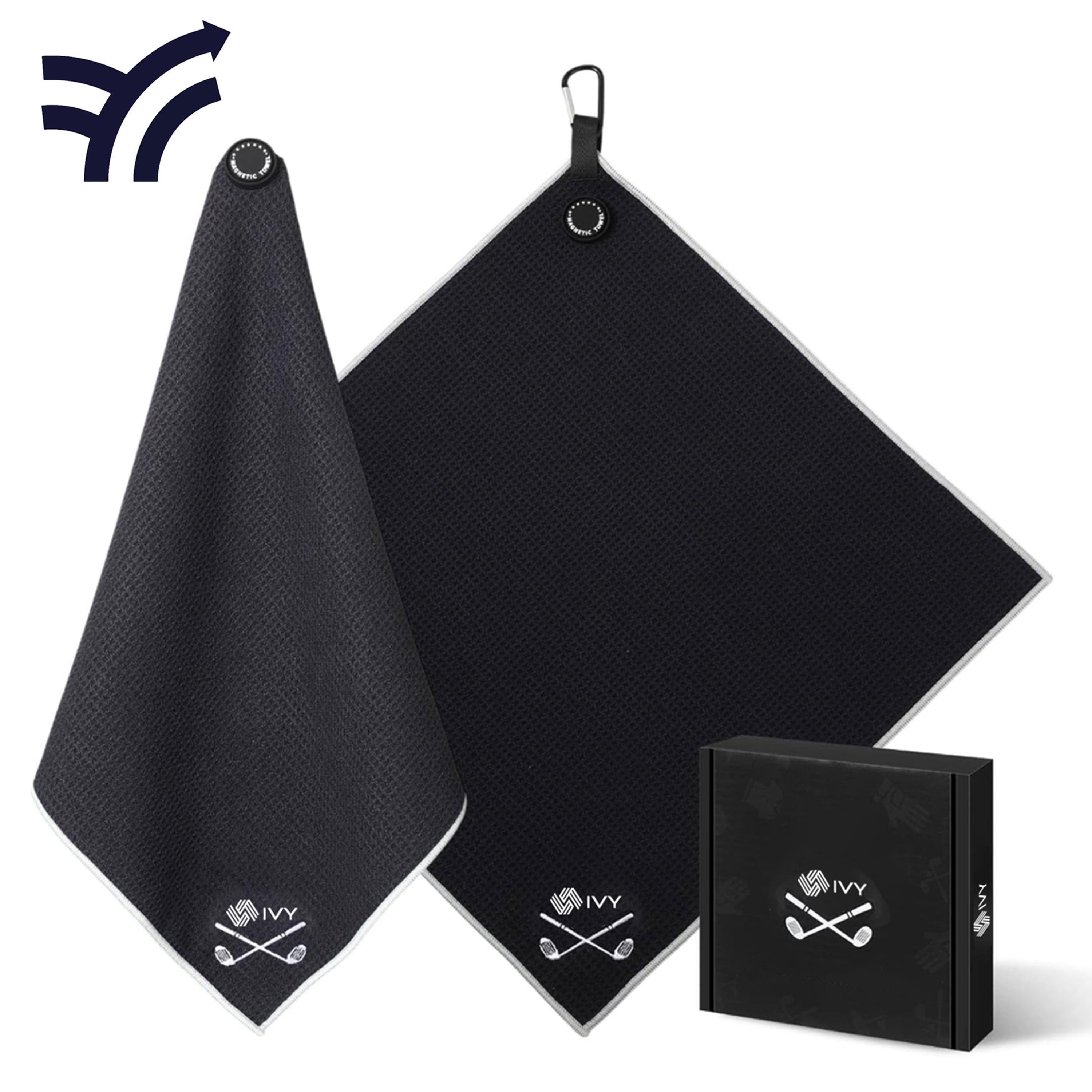
Wholesale buyers do not operate in a single, uniform environment. A golf equipment distributor supplying pro shops has very different packaging needs compared to a corporate gifting company or an e-commerce warehouse. For retail display, golf towels often require hang tags, branded poly bags, or premium box packaging that communicates quality at a glance. For bulk warehouse distribution, the priority shifts toward stackable, space-efficient packaging that minimizes freight costs and speeds up pick-and-pack operations.
Understanding these channel differences allows suppliers to offer tiered packaging options. A magnetic golf towel presented in a rigid gift box, for instance, appeals to high-end retail buyers and corporate gift purchasers. Meanwhile, a simple OPP poly bag with a header card might be perfectly sufficient for volume-driven budget retailers. Knowing your buyer's sales environment is the starting point for any effective golf towels packaging strategy.
Compliance is another layer of wholesale packaging requirements. Certain retail chains mandate specific barcode placements, country-of-origin labeling, and poly bag safety warnings. Meeting these specifications from the production stage — rather than retrofitting them — saves significant time and cost for both supplier and buyer. Golf towels that arrive pre-compliant with a retailer's packaging standards move faster through the supply chain.
Wholesale packaging for golf towels also involves decisions about inner pack and master carton configuration. Most wholesale buyers want golf towels pre-sorted by color, size, or style into inner packs of consistent quantity — typically 6, 12, or 24 pieces per inner pack. This reduces sorting labor at the distribution center and makes inventory management significantly easier.
Master carton sizing should be engineered to maximize pallet efficiency. Oddly shaped or oversized cartons create wasted cubic space during shipping and increase freight costs per unit. For golf towels, which are inherently compressible and lightweight, tightly rolled or flat-folded configurations allow for very dense packing ratios. Suppliers who proactively design their packaging around standard pallet dimensions win more repeat wholesale orders because they reduce their buyers' logistics burden.
Among the various packaging formats available, rigid gift boxes remain the most compelling option when golf towels are being positioned at the premium or gift market segment. A well-designed rigid box elevates the perceived value of the product immediately. For magnetic golf towels or microfiber golf towels with embroidery or special finishes, a magnetic closure box or drawer-style box adds a tactile premium that resonates with gift buyers and pro shop retailers alike.
Rigid box packaging also provides excellent protection during transit, which is particularly valuable when golf towels are shipped internationally. The structured walls prevent compression damage, keep the towel's fold clean and presentable, and ensure the product arrives at the retail floor looking shelf-ready without additional repackaging. For wholesale orders destined for corporate gifting programs, branded rigid boxes allow the buyer's logo and messaging to be incorporated directly into the packaging design.
The trade-off with rigid box packaging is cost and volume efficiency. Rigid boxes are heavier and bulkier than flexible packaging options, which increases per-unit shipping costs. For this reason, many wholesale buyers specify rigid box packaging only for their premium SKU lines while defaulting to lighter solutions for volume lines. Suppliers of golf towels who offer both options within the same catalog give buyers more flexibility to match packaging to margin targets.
For wholesale golf towels intended for high-volume retail environments, polybag packaging combined with a printed header card remains one of the most practical and cost-effective solutions. The header card can carry all necessary retail information — product name, material specs, care instructions, barcode, and brand logo — while the clear poly bag allows the towel's color and texture to be visible to the shopper without opening the package.
OPP (oriented polypropylene) bags offer a slight upgrade over standard poly bags in terms of clarity and surface finish. For golf towels with attractive woven borders, embossed logos, or multicolor designs, OPP packaging allows those visual elements to shine through, adding shelf appeal without the cost of a rigid box. This format is commonly used for golf towels sold in sporting goods chains where shoppers browse displays and make quick purchase decisions based on visible product quality.
Roll-and-band packaging is another lightweight format used for golf towels in wholesale. The towel is tightly rolled and secured with a printed belly band carrying product information and branding. This format is particularly popular for microfiber golf towels displayed in counter-top dump bins or pegboard hooks in pro shops. Its minimalist structure keeps costs low while still delivering brand presence on the retail floor.
Sustainability has moved from a niche concern to a mainstream wholesale requirement for golf towels and many other sporting goods. An increasing number of wholesale buyers — particularly those supplying to environmentally conscious retailers or corporate clients with ESG mandates — specify recyclable or biodegradable packaging as a baseline requirement. Kraft paper wraps, recycled cardboard boxes, water-based printing inks, and compostable poly bags are all gaining traction as packaging materials for golf towels.
Recycled kraft boxes offer a compelling combination of sustainability and premium aesthetics. Their natural brown texture conveys an earthy, responsible brand image while still allowing for high-quality custom printing. For golf towels marketed under an eco-conscious brand identity, kraft packaging reinforces the product's value proposition across the entire customer journey from unboxing to recycling bin.
Suppliers who can certify their packaging materials — through FSC certification for paper-based materials or accepted composting standards for bio-based films — add a verifiable layer of credibility that resonates with procurement teams at large retailers. Offering eco-certified packaging options alongside conventional alternatives positions a golf towel supplier as forward-thinking and adaptable to evolving market demands.
Private label packaging is one of the most powerful tools available to wholesale buyers of golf towels. Rather than selling a generic product, buyers who invest in branded packaging create a proprietary identity that cannot be easily replicated on price alone. The packaging becomes an extension of the brand — communicating values, quality standards, and differentiation in a competitive retail environment.
For golf towels in particular, private label packaging might include custom-printed boxes with the buyer's logo and color palette, custom woven labels sewn into the towel itself, hang tags with QR codes linking to product care content or brand stories, and branded tissue paper or ribbon accents for gift-tier lines. Each of these touchpoints accumulates into a cohesive brand experience that justifies premium pricing and builds customer loyalty.
Minimum order quantities (MOQs) for custom packaging can be a concern for smaller wholesale buyers. However, digital printing advances have significantly lowered the cost of short-run custom packaging for golf towels. Buyers who are new to private labeling can often start with customized hang tags and printed header cards — lower-cost customization elements — before progressing to full custom box programs as their volumes grow.
The golf market has clearly defined seasonal rhythms — spring equipment launches, summer tournament gifts, holiday gifting windows — and wholesale buyers who adapt their golf towels packaging to match these seasonal opportunities consistently outperform those who rely on year-round generic packaging. A holiday-themed gift box for golf towels, for example, significantly increases impulse purchase rates in December and makes the product viable as a standalone gift item rather than just an accessory.
Promotional packaging variants, such as two-pack bundles or towel-and-accessory combination packs, also expand the commercial opportunity for golf towels in wholesale. Bundled packaging creates a higher price-point SKU without dramatically increasing cost, while also giving retail buyers a differentiated product they cannot find everywhere. This strategy works especially well for golf pro shops and specialty retailers looking to offer exclusive merchandise to their membership bases.
Effective packaging for wholesale golf towels must account for the physical journey from factory to end shelf. This means protection against moisture, compression, soiling, and mechanical impact during extended sea freight or air freight transit. Inner poly bags provide moisture barriers for individual units. Adequate inner packing with tissue or corrugated dividers prevents color transfer between towels of different hues in multi-pack assortments.
Master carton testing — including drop tests and compression stack tests — should be part of the quality assurance process for any high-volume golf towel wholesale program. A carton that fails midway through a six-week ocean voyage can damage an entire shipment and create costly chargebacks. Specifying appropriate wall thickness for corrugated cartons, reinforcing corner joints, and using moisture-resistant carton coatings are all practical measures that protect golf towels and preserve the buyer's investment.
Storage conditions in warehouses and distribution centers also influence packaging choices. Golf towels that may sit in storage for several months before being picked for retail replenishment need packaging that resists yellowing, flattening, or losing structural integrity under long-term compression. Robust inner pack construction and breathable outer cartons help maintain product condition through extended warehousing periods.
Before golf towels leave the factory, a systematic packaging inspection process ensures that every unit meets the agreed specifications. This includes checking that hang tags are correctly attached and readable, barcodes scan accurately, folding and packing configurations are consistent, and any required regulatory labels — such as fiber content and country of origin — are correctly placed. Inconsistent packaging quality creates retail-level problems that erode buyer confidence and damage long-term wholesale relationships.
Third-party inspection services are commonly used by experienced wholesale buyers to verify packaging quality on large orders of golf towels before shipment. An AQL (Acceptable Quality Level) sampling standard is typically applied to check both product and packaging condition. Suppliers who proactively align their internal quality processes with these inspection standards reduce the risk of failed inspections and demonstrate the professional competence that wholesale buyers require for sustained partnerships.
For volume-driven wholesale programs, polybag packaging with a printed header card or a roll-and-band format offers the best balance of cost efficiency and retail presentation. These formats keep per-unit packaging costs low while still delivering adequate brand visibility and product protection. Rigid box packaging, though more expensive, is the preferred option for premium or gift-market golf towels where perceived value justifies the added cost.
Yes, custom branding is a standard offering for most wholesale golf towel suppliers at sufficient order volumes. Options typically include custom-printed boxes, woven labels, hang tags, and branded poly bags. Some suppliers also offer short-run digital printing for buyers with lower minimum quantities, making private label packaging accessible even at smaller wholesale scale.
Golf towels should be tightly rolled or flat-folded and packed in inner packs configured to align with standard master carton dimensions that optimize pallet density. Avoiding oversized cartons, choosing lightweight packaging materials, and compressing towels to the minimum practical dimensions all contribute to lower cubic weight and reduced freight costs per unit.
Sustainable packaging options for golf towels include FSC-certified recycled kraft paper boxes, compostable or biodegradable poly bags, water-based inks for printed components, and recycled corrugated cartons. Suppliers offering certified eco-packaging can provide documentation that satisfies retail buyers with sustainability compliance requirements, making them more competitive in environmentally conscious wholesale markets.

 EN
EN


