When sourcing products at scale for golf clubs, pro shops, tournaments, or resale operations, quality consistency becomes far more critical than it does with individual retail purchases. A golf towel may seem like a straightforward accessory, but in bulk purchasing scenarios, even small variations in material quality, stitching, or size tolerances can translate into significant financial and reputational losses. Understanding what to inspect before committing to a large order is not just a procurement best practice — it is essential risk management for any serious buyer.
The market for bulk golf towel procurement spans a wide spectrum of end uses — from branded merchandise for corporate golf events to everyday utility towels stocked in pro shop retail. In every application, the end user expects the golf towel to perform reliably: absorbing moisture, withstanding repeated washing, holding embroidered or printed branding, and feeling premium in hand. This article walks through the essential quality checks that experienced buyers apply when evaluating golf towel bulk orders, helping you avoid costly surprises and establish a dependable supply chain.
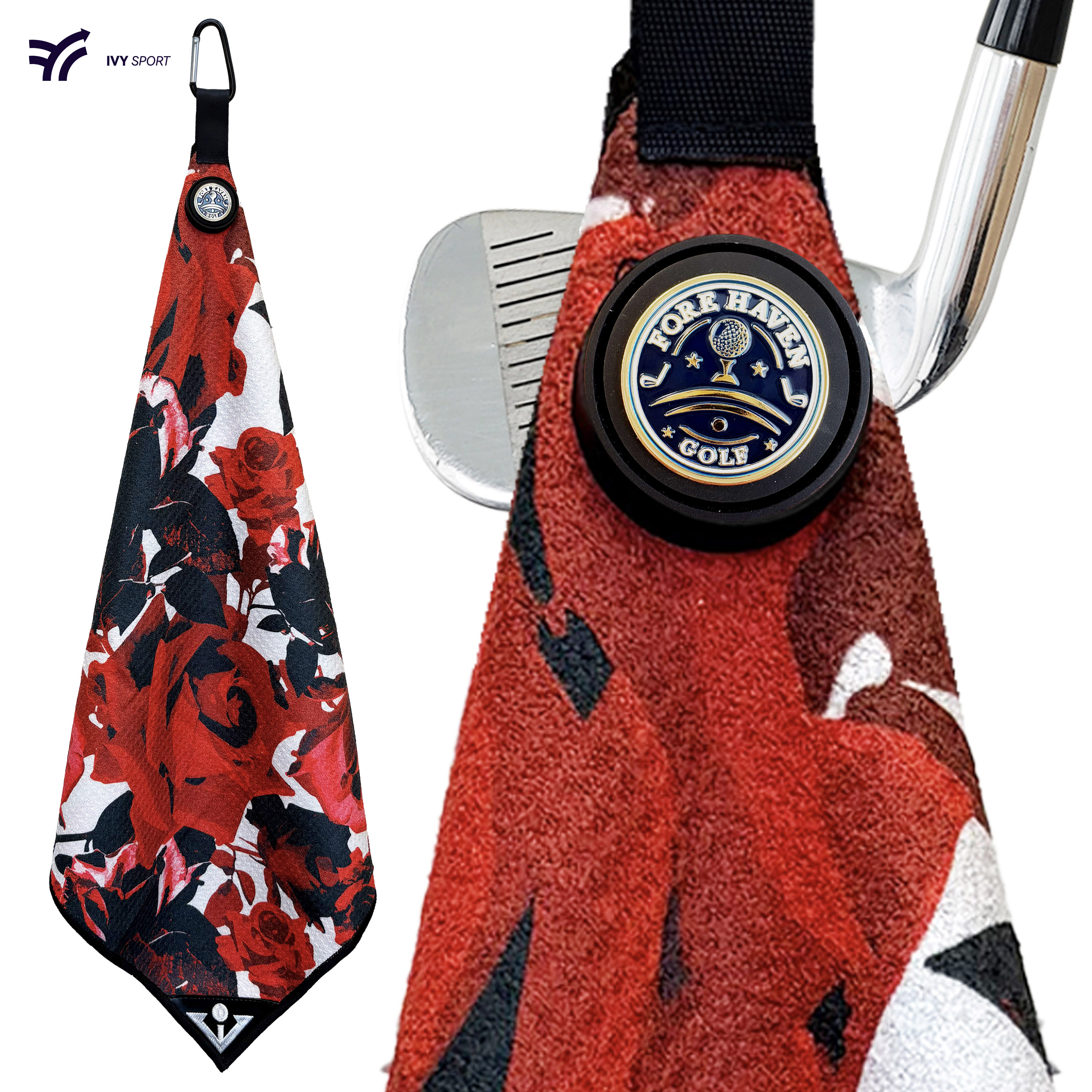
The foundation of any quality assessment for a golf towel starts with the fabric itself. The most widely used and performance-trusted material in modern golf towels is microfiber, typically a blend of polyester and polyamide (nylon). This composition determines the towel's core functional qualities: absorption speed, drying time, softness, and durability over repeated washing cycles. When evaluating a bulk order, buyers should request material specification sheets that clearly state the fiber blend ratio, with a common high-performance ratio being 80% polyester and 20% polyamide.
A golf towel made with substandard fiber ratios or lower-grade raw materials may feel acceptable on first handling but will degrade rapidly under regular laundering. The pile structure collapses, absorption drops, and the towel begins to feel stiff or scratchy — all of which reflect poorly on the brand or organization that distributed them. Requesting third-party fiber composition test reports or conducting simple water absorption tests on samples before approving a bulk order is a standard and necessary step.
GSM (grams per square meter) is another critical fabric metric. For a performance golf towel, a GSM range of 300 to 500 is typically expected, balancing absorbency with a lightweight, packable form factor. Towels with a GSM below 280 often feel thin and insubstantial, while those above 550 may be too heavy for practical on-course use. Always confirm the stated GSM against physical weight measurement on received samples, as discrepancies between quoted and actual GSM are a common quality issue in bulk sourcing.
Color is a significant functional and aesthetic concern in golf towel bulk purchasing, particularly when the towels carry a brand color or must match a club's uniform palette. Colorfastness — the fabric's ability to retain its color under washing, sweating, and sunlight exposure — must be tested before full production sign-off. Industry-standard testing follows ISO or AATCC protocols, and reputable suppliers should be able to provide colorfastness test certificates covering wash fastness, light fastness, and rubbing fastness.
Equally important is dye batch consistency across the entire bulk order. In large production runs, it is not uncommon for slight color shifts to occur between dye lots, resulting in a set of golf towels that look slightly different side by side. Buyers should specify acceptable Delta E tolerances in their purchase contract and request pre-shipment color consistency checks. This is especially critical for tournament or corporate gifting orders where uniformity of appearance is part of the value proposition.
The structural integrity of a golf towel depends heavily on how it is sewn together. In bulk production, stitching quality often varies due to machine calibration inconsistencies, operator fatigue, or material feed irregularities. A well-constructed golf towel should feature even stitch density across all seams, with no skipped stitches, loose threads, or tension irregularities visible on either face of the fabric. Seam strength testing, following ASTM or ISO tensile test standards, is a practical measure buyers can require suppliers to perform and document.
Thread quality matters as much as stitch density. Low-grade thread is prone to breakage during laundering, which causes seams to unravel prematurely. For a golf towel expected to survive dozens of wash cycles, the thread should be polyester-core for strength, and the stitch count should meet a minimum threshold appropriate for the fabric weight. Buyers sourcing through agents or trading companies should be particularly vigilant here, as subcontracted production can introduce variability that the intermediary may not consistently monitor.
The edges of a golf towel are high-stress zones — they take repeated pulling, hanging, clipping, and washing. Standard finishing methods include overlocked edges, hemmed borders, and bound edges using contrasting or matching ribbon trim. Each approach has its own durability profile, and the right choice depends on the intended application. For heavy-use utility golf towels, overlocked and hemmed edges typically provide the best longevity, while ribbon-bound edges offer a more premium aesthetic suitable for branded or gift-market products.
During quality inspection, each golf towel in the sample set should be examined for edge curl, fraying threads, uneven binding width, and attachment security of any hook or clip hardware. The carabiner or grommet attachment — a standard feature on most golf towels — must also be evaluated for corrosion resistance, load capacity, and secure fabric anchoring. A rusting clip or a grommet that tears free from the towel body under normal tension is a significant quality failure that reflects directly on the product's usability and the buyer's credibility.
For the vast majority of golf towel bulk purchases, custom branding is a central requirement. Whether the application is embroidery, heat transfer, or screen printing, the quality of the decoration directly affects the perceived value of the product. Embroidery is the most durable and premium-feeling method for golf towels, and its quality depends on thread count, stitch density, backing fabric stability, and the precision of the digitized logo file. Buyers should request pre-production strike-off samples that show exactly how the embroidered logo will look on the specific fabric and in the confirmed placement location.
Thread color accuracy is a particular concern in embroidered golf towel orders. Thread shades are matched to Pantone or thread catalog references, but the visual result can shift based on fabric color and texture. Getting a physical sample with the exact thread colors approved before mass production prevents the costly scenario of receiving thousands of golf towels with branding that does not match the client's corporate color standards. Embroidery registration — meaning the placement consistency from towel to towel — should also be checked across the sample set, as placement drift is a common bulk production issue.
When printing rather than embroidery is used on a golf towel, wash resistance becomes the primary quality concern. Screen-printed or heat-transfer logos must adhere firmly to microfiber fabric, which has a naturally low surface energy that can cause adhesion challenges. Quality buyers should require printed samples to undergo a minimum of 20 standardized wash cycles before approval, with post-wash inspection confirming that the logo retains its shape, edge definition, and color intensity without peeling, cracking, or fading.
Sublimation printing, which infuses dye directly into polyester fibers, offers superior wash durability compared to surface-applied print methods. However, it limits the achievable color depth on darker fabric backgrounds. Understanding which printing method is most appropriate for your specific golf towel design and end-use context — and then rigorously testing that method before approving bulk production — is a practical quality control step that prevents post-delivery disputes and reorder costs.
A golf towel's specified dimensions must be met consistently across the entire bulk order. Standard sizes for golf towels typically range from approximately 16 x 24 inches for mid-size models to 14 x 42 inches for waffle-weave or long-format designs. When size specifications are not met within acceptable tolerances — typically plus or minus half an inch — the product may not fit properly in retail packaging, may create uniformity issues in branded gift sets, or may simply feel undersized to the end user.
Measurement verification should be conducted on a statistically significant sample from each production lot, not just a handful of pieces. Buyers working with quality assurance firms or conducting factory audits should specify a minimum inspection sample size based on the order volume, following AQL (Acceptable Quality Level) standards. Any lot showing dimensional non-conformance above the agreed threshold should trigger a full hold and investigation before shipment is authorized.
Individual towel weight, when measured accurately and compared against the specification, serves as a reliable proxy for material consistency throughout a bulk order. If a golf towel is specified at a certain GSM and size, its expected dry weight can be calculated precisely. Weighing a sample set and finding significant variation across units is a strong indicator that the fabric GSM was not consistently maintained during weaving, or that cutting and finishing tolerances were not properly controlled in production.
This type of simple but effective check is often overlooked by buyers focused exclusively on visual inspection. Incorporating a weight verification step into the incoming goods inspection or pre-shipment inspection procedure adds a quantitative layer of quality assurance that complements visual checks and helps catch material substitution issues that might otherwise go undetected until the product is already in use and generating complaints.
Quality extends beyond the product itself to the way a golf towel is packaged for delivery, retail display, or gifting. For retail-ready bulk orders, individual packaging — whether a polybag, a folded presentation box, or a hang tag assembly — must meet the buyer's specifications precisely. Incorrect folding, missing hang tags, improperly applied retail barcodes, or damaged packaging encountered upon receipt all create downstream operational problems that add cost and delay to the supply chain.
Master carton quality is equally important for logistics integrity. Carton strength (measured in burst strength or edge crush test values), correct marking, accurate quantity packing, and moisture resistance all affect whether the golf towel arrives at its destination in saleable condition. Specifying carton standards in the purchase order and verifying compliance at the pre-shipment inspection stage is a straightforward step that prevents transit damage claims and receiving discrepancies.
Care labels, country-of-origin labels, and fiber content labels are legal requirements in most major import markets and must be accurate and legibly attached in the correct location. For a golf towel entering markets such as the United States, European Union, or Japan, care label requirements are governed by specific regulatory standards that specify language, symbol usage, and placement. Errors or omissions in product labeling can result in customs holds, fines, or mandatory product recalls — all of which are entirely preventable through thorough pre-shipment label verification.
Buyers should provide suppliers with a complete labeling specification sheet as part of the order documentation, and verify label compliance on approved pre-production samples before mass production begins. Checking labels again during the pre-shipment inspection ensures that what was approved at the sample stage has been correctly carried through to the bulk production run. This diligence protects the buyer from compliance liability and reinforces the overall integrity of the procurement process.
Material quality — specifically the fiber composition and GSM — is the most foundational quality factor, because it determines the golf towel's absorption performance, durability, and feel across its entire service life. However, construction quality, colorfastness, and branding accuracy are equally critical when the towels carry custom logos or must meet uniform appearance standards across large quantities.
The industry standard approach is to follow AQL (Acceptable Quality Level) sampling plans, which define the appropriate sample size based on total order quantity. For a typical bulk golf towel order of 1,000 to 5,000 units, a Level II AQL 2.5 inspection generally requires checking between 80 and 200 units. Buyers seeking higher confidence may increase the sample size or require 100% inspection on critical attributes such as branding placement and dimensional accuracy.
Yes, even modest GSM inconsistencies within a bulk batch can produce noticeable differences in how individual golf towels feel and perform. A towel that is 10 to 15% lighter than its specified GSM will absorb less moisture, feel thinner, and show wear more quickly. When end users receive a set of golf towels that feel inconsistent, it undermines confidence in the product's quality regardless of how the branding looks.
A well-constructed purchase order for golf towel bulk purchasing should include: material specifications (fiber blend, GSM, colorfastness standards), dimensional tolerances, construction requirements (stitch density, hem type, hardware specs), branding specifications (placement, size, color references), labeling requirements, packaging standards, AQL inspection level, and pre-shipment inspection terms. Including these details in writing before production begins is the most effective way to align expectations and create accountability throughout the supply chain.

 EN
EN


