For studios, wellness brands, fitness distributors, and corporate wellness programs, placing bulk orders for yoga towels is a significant procurement decision that goes far beyond simply choosing the lowest unit price. The right bulk purchase supports your brand reputation, satisfies your end customers, and ensures that every mat session delivers the grip, absorbency, and comfort practitioners expect. Getting these decisions right from the start saves time, reduces returns, and builds long-term supplier trust.
This guide is designed specifically for bulk buyers who need a structured, practical framework for evaluating yoga towels before committing to a large-volume order. Whether you are stocking a retail chain, outfitting a chain of yoga studios, or building a private-label wellness product line, each factor covered here will help you make a more informed, commercially sound decision. Understanding what separates a high-performance yoga towel from a mediocre one is the foundation of smart bulk buying.
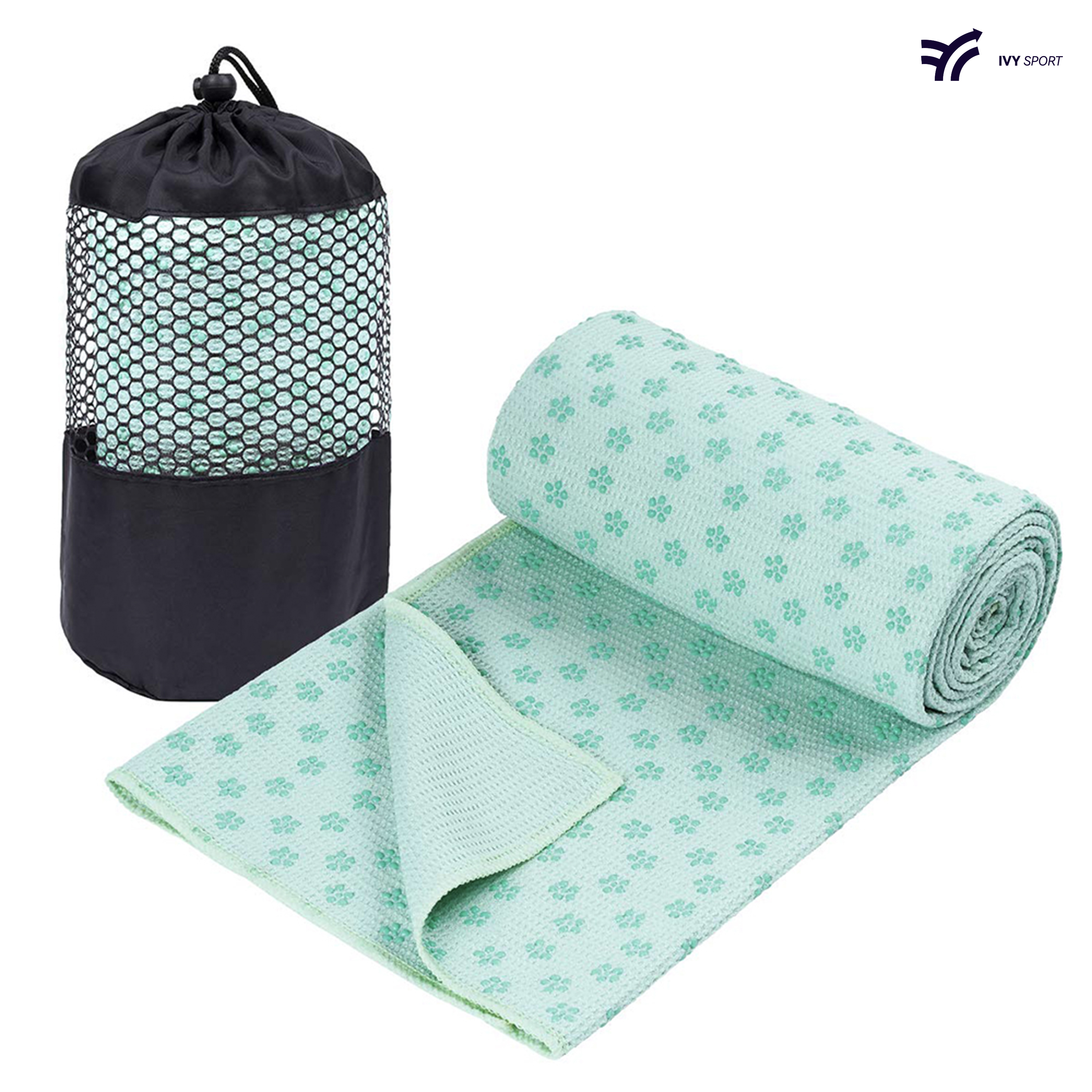
When evaluating yoga towels at scale, fabric composition is the single most important starting point. The overwhelming majority of high-performance yoga towels on the market today are manufactured from microfiber, typically a polyester-polyamide blend. This material offers exceptional moisture-wicking capability, meaning it draws sweat away from the surface quickly and spreads it across a larger area to facilitate rapid evaporation. For hot yoga and high-intensity sessions, this characteristic is not optional — it is essential.
Bulk buyers should look for a GSM (grams per square meter) rating that reflects actual use cases. A GSM between 280 and 400 is generally considered ideal for yoga towels intended for studio use. Higher GSM values indicate a denser, heavier fabric that absorbs more moisture but may take longer to dry, while lower GSM values produce lighter, faster-drying towels that may sacrifice some absorbency. Understanding this trade-off allows bulk buyers to match the product specification to their target market without guessing.
In addition to microfiber blends, some yoga towels incorporate natural or semi-natural materials such as bamboo fiber or organic cotton. These options appeal to sustainability-conscious buyers but typically come at a higher cost per unit and may require more careful washing instructions. For retail buyers building an eco-conscious product line, these materials offer strong marketing differentiation. For high-volume studio procurement, they may be less practical than standard microfiber yoga towels due to care complexity and cost implications.
The surface texture of yoga towels directly determines grip performance during practice. A smooth, flat-woven surface will feel comfortable but may slide on both the practitioner and the mat underneath. Most premium yoga towels use a raised or looped pile structure that increases surface friction when activated by moisture — a technology sometimes called 'wet grip.' This means the towel actually becomes more slip-resistant as the user sweats, which is a critical feature for hot yoga and power yoga formats.
Bulk buyers should request physical samples before committing to a large order. Testing the dry grip and wet grip separately under realistic conditions will reveal whether the yoga towels in question perform as advertised. Some manufacturers use silicone grip dots or printed grip patterns on the underside of the towel to prevent it from shifting on the mat surface. This feature adds production cost but significantly improves the user experience and reduces complaints in studio environments.
Yoga towels are typically produced in two primary sizes: mat-length towels that cover the entire yoga mat surface, and hand towels that serve as supplementary wipe-down tools during practice. For bulk buyers supplying studios or bundling products for retail, understanding which size is appropriate for the intended use case is critical. Mat-length yoga towels are generally around 183 cm by 61 cm, which corresponds to the standard dimensions of most yoga mats worldwide.
However, yoga mat dimensions are not universally standardized. Some brands produce wider mats (up to 66 cm or 72 cm), and taller practitioners often use extended mats. Bulk buyers who plan to supply specialty studios or premium retail environments should consider offering yoga towels in multiple size options or specifying custom dimensions with their manufacturer. Ensuring dimensional compatibility reduces customer dissatisfaction and minimizes the risk of the towel bunching, folding, or falling off the mat during use.
Weight and packability are especially relevant for buyers who intend to retail yoga towels as travel accessories or bundle them with yoga bags and kits. A yoga towel that folds compactly and weighs less than 300 grams appeals strongly to travelers and outdoor yoga practitioners. Bulk buyers in this segment should specify both the fabric weight and the folded dimensions when communicating product requirements to their supplier.
For studio buyers, packability is less critical than durability and ease of laundering. Towels that are used multiple times per day in a studio setting need to withstand repeated machine washing without shrinking, losing color, or degrading in texture. This durability requirement should be reflected in the product specification and ideally verified through wash-cycle testing data provided by the supplier.
One of the primary advantages of buying yoga towels in bulk is the ability to customize the product with your brand identity. Most manufacturers capable of handling large orders offer private label services, which include logo printing, custom colorways, and branded packaging. Bulk buyers should clarify the minimum order quantity (MOQ) required to unlock customization options, as this threshold varies significantly between suppliers and can affect overall procurement strategy.
Printing methods for yoga towels include sublimation printing, screen printing, and woven label integration. Sublimation printing produces the most vibrant and durable results on polyester-based yoga towels, as the dye bonds directly with the fabric fibers rather than sitting on top of the surface. For buyers building a strong visual brand, sublimation-printed yoga towels offer far superior longevity and color accuracy compared to surface-applied prints that may crack or fade after repeated washing.
Custom packaging is another branding dimension that bulk buyers often overlook in early discussions. The way yoga towels are presented — whether in poly bags, kraft paper wrap, hang tags, or retail-ready boxes — communicates brand positioning to the end buyer. Buyers intending to sell through physical retail channels should confirm that the packaging format is compatible with the retailer's display requirements and shipping logistics before finalizing the order.
Color selection for yoga towels should be guided by market research rather than personal preference. Neutral tones such as slate grey, deep navy, and forest green have broad appeal across demographics and age groups, while bold patterns or bright colors may resonate more strongly with younger, fashion-conscious yoga consumers. Bulk buyers supplying corporate wellness programs often prefer solid, neutral colors that align with employer brand guidelines.
When specifying colors for large orders, buyers should request Pantone color matching or equivalent color specification documentation to ensure consistency across production runs. Color variation between batches is a common quality issue in textile manufacturing, and proactive color management from the specification stage reduces disputes and costly reorders. High-quality yoga towels should maintain consistent color appearance after multiple washes, which is a reasonable quality expectation to include in any procurement agreement.
Bulk buyers have a responsibility to their downstream customers to verify that the yoga towels they source meet relevant quality and safety standards. For textile products sold in consumer markets, certifications such as OEKO-TEX Standard 100 are highly relevant, as they confirm that the fabric has been tested for harmful substances and is safe for skin contact. This certification is increasingly expected by retail buyers and wellness consumers who prioritize health and sustainability.
Beyond chemical safety, bulk buyers should evaluate suppliers on their quality control processes, including in-line inspection during production and final pre-shipment inspection before goods are dispatched. Requesting a copy of the supplier's quality management documentation or audit reports gives buyers greater confidence that the yoga towels they receive will match the approved samples. Working with suppliers who are ISO-certified or who have undergone third-party social audits adds another layer of procurement security.
No bulk order of yoga towels should be placed without a thorough sample evaluation stage. This means requesting a physical pre-production sample that reflects the exact specifications of the intended order — including fabric, color, size, printing, and packaging. Evaluating the sample against a detailed checklist before approving production is the most effective way to prevent costly quality discrepancies at the point of delivery.
Buyers should also conduct functional testing on samples under realistic use conditions. This includes testing wet grip performance, absorbency rate, color fastness after washing, and dimensional stability after laundering. Documenting these test results creates a quality benchmark that can be referenced in the event of a dispute with the supplier. The small investment in thorough pre-production evaluation typically pays for itself many times over by preventing returns, refunds, and reputational damage.
Bulk pricing for yoga towels is typically structured in tiered brackets, where the unit cost decreases as order volume increases. Buyers should map out their realistic order volumes across several scenarios before entering price negotiations, as committing to a higher volume tier may only be justified if the buyer can confidently move that volume within a reasonable timeframe. Overstocking yoga towels ties up working capital and introduces inventory risk, particularly if the product is highly seasonal or tied to a specific trend.
Payment terms are a closely related consideration. Suppliers often require a deposit of 30 to 50 percent before production begins, with the balance due before shipment. Buyers with strong supplier relationships may negotiate more favorable terms such as net 30 or 60 payment after delivery, which improves cash flow management. Building a track record of reliable, on-time payment is one of the most effective ways to secure better pricing and priority production scheduling over time.
Lead times for custom-manufactured yoga towels typically range from 30 to 60 days after sample approval and deposit receipt, depending on order complexity, production capacity, and shipping method. Bulk buyers who sell through retail channels or distribute to studios need to plan their procurement calendar accordingly, factoring in seasonal demand peaks such as the New Year wellness surge or the back-to-school yoga season in many markets.
Buyers should also factor in shipping lead times, customs clearance, and domestic distribution when calculating total order-to-shelf timelines. Air freight significantly reduces transit time but adds substantially to per-unit cost, making it appropriate mainly for smaller urgent orders or rush replenishments. Sea freight is the standard for large bulk orders of yoga towels, offering the best cost efficiency but requiring more advanced planning. Reliable communication with the supplier about production milestones is essential to avoid surprises.
Minimum order quantities for yoga towels vary by supplier and customization level. Standard non-customized yoga towels may have MOQs as low as 50 to 100 units, while custom-printed or private-label orders typically require a minimum of 200 to 500 units per colorway or design. Buyers should always confirm MOQ requirements early in the supplier conversation, as they directly affect the viability of smaller or more diverse product ranges.
The most reliable approach is to request a detailed pre-production sample that matches all specifications of the intended order. Buyers should test wet grip, absorbency, color fastness, and dimensional stability under realistic use and wash conditions. Engaging a third-party inspection agency to conduct a pre-shipment inspection before goods leave the factory adds a further layer of quality assurance, particularly for new supplier relationships.
Yes, several eco-friendly options exist in the bulk yoga towel market. These include towels made from recycled polyester (rPET), organic cotton blends, or bamboo-derived fibers. Buyers targeting sustainability-conscious markets should look for relevant certifications such as GRS (Global Recycled Standard) or GOTS (Global Organic Textile Standard) to substantiate eco-friendly claims. It is important to verify that the packaging and labeling claims are supported by documented certification to avoid greenwashing exposure.
Color consistency across production runs is best managed through Pantone color specifications or standardized lab dip approvals before each new production batch. Buyers should require the supplier to submit color lab dips for approval before proceeding with dyeing, and should retain a physical color standard swatch from the approved sample for reference. Including a color tolerance clause in the purchase contract — typically plus or minus two Pantone shades — gives both parties a clear benchmark for acceptable variation.

 EN
EN


